


Bringing tech careers to rural America creates outsized economic returns for both companies and communities
January 13, 2026

Investing in rural America is often framed as a social good. Increasingly, it is also a business advantage. When companies place high-quality, onshore careers in rural communities, they tend to unlock unusually strong workforce stability, because people are able to build long-term careers without leaving the places they already call home.


That continuity compounds into better performance over time, while the steady presence of career-track jobs creates ripple effects that extend beyond the workplace, bringing new energy and investment back to local Main Streets. Together, those dynamics explain why rural hiring, when done intentionally, can deliver returns that reach both the balance sheet and the broader community.


Rural America offers a retention advantage that many companies overlook

In many rural communities, access to stable, career-track work is limited. When those opportunities exist locally, they tend to carry more weight than comparable roles in crowded labor markets. Research on workforce behavior consistently shows that when jobs offer advancement and stability in places with fewer alternatives, employees stay longer. This pattern is not about sentiment. It is about incentives, opportunity cost, and place.


Why people stay when careers are local

One useful framework for understanding this dynamic is impact sourcing, a workforce model that prioritizes hiring and training people in underserved or economically constrained communities. The World Bank describes impact sourcing as a model that creates both social and business value by expanding access to formal employment while improving workforce stability.


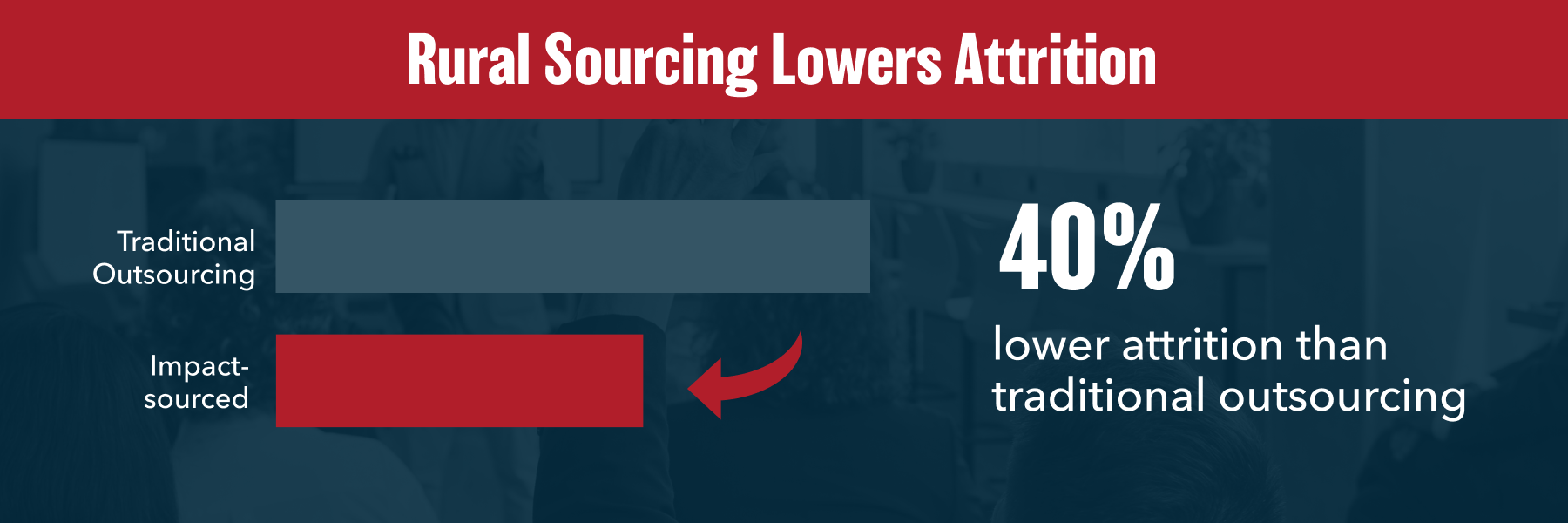
Independent research summarized by BSR and the Global Impact Sourcing Coalition, drawing on Everest Group analysis, reports 15 to 40 percent lower attrition among impact-sourced workers compared with traditional outsourcing models.

While much of this research focuses on global delivery, the underlying mechanism maps closely to rural America. When career-track roles are placed in communities with limited local alternatives, the relative value of staying increases. Employees are not choosing between lateral moves. They are choosing between stability at home and disruption elsewhere.


How retention shows up in business performance

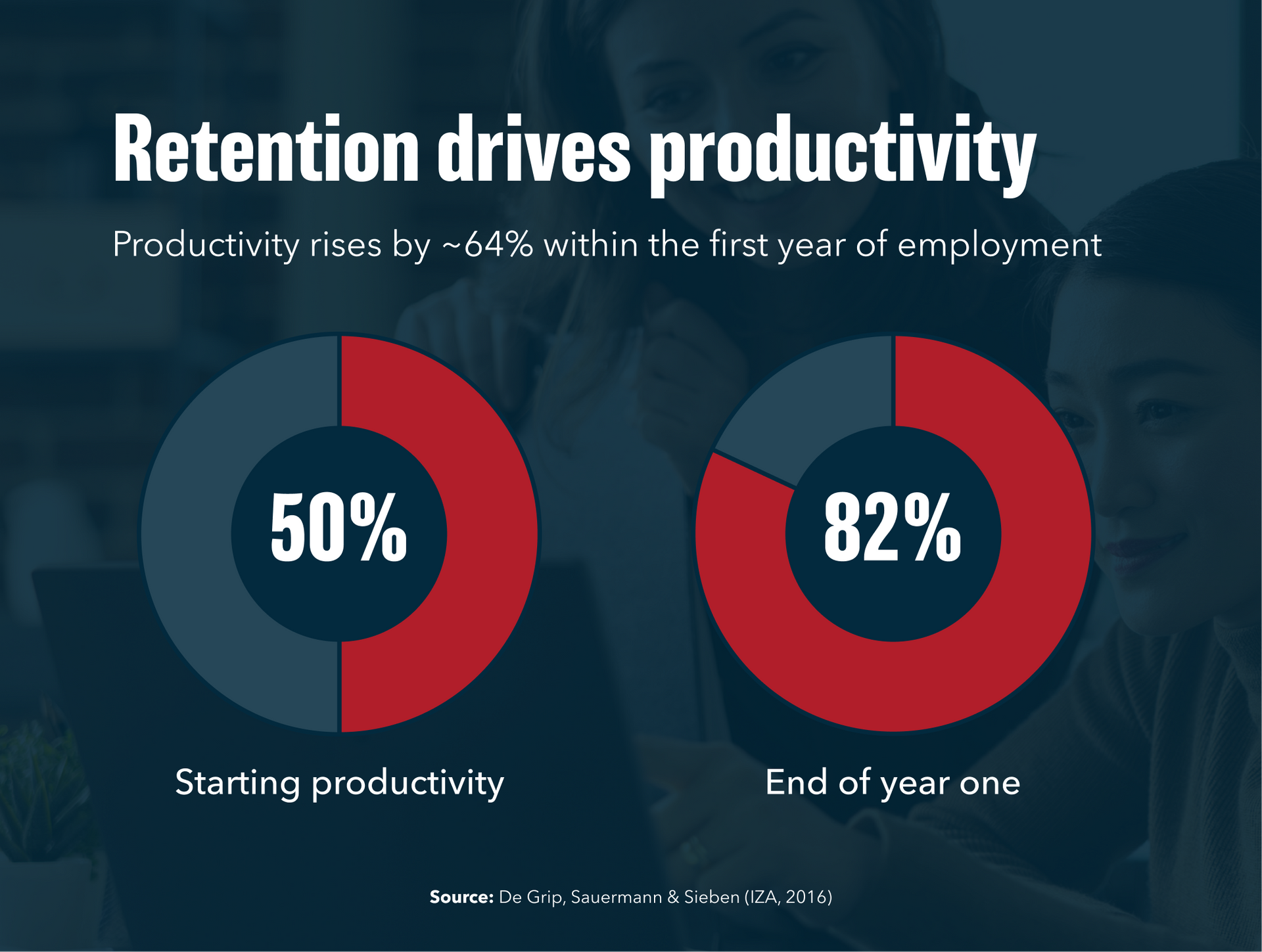
Retention is not just a workforce metric. It is a business performance variable. When employees stay longer, organizations spend less time and money replacing them, and more time benefiting from the skills and judgment those employees build over time. Research on service operations makes this connection clear. In call center environments, performance improves significantly with tenure, with one study showing productivity rising by roughly 64 percent within the first year as employees learn systems, products, and customer needs.

Customers experience this stability directly. A Journal of Applied Psychology study examining 75 work units and more than 59,000 customer surveys found that higher voluntary turnover was associated with lower customer service quality ratings.


Put simply, better retention is better for business. Stable teams resolve issues faster, make fewer mistakes, and deliver more consistent experiences. When companies invest in rural, impact-sourcing models that keep people in place longer, they are not just reducing churn. They are protecting performance, quality, and customer trust.


Putting people to work in rural places brings Main Street back to life

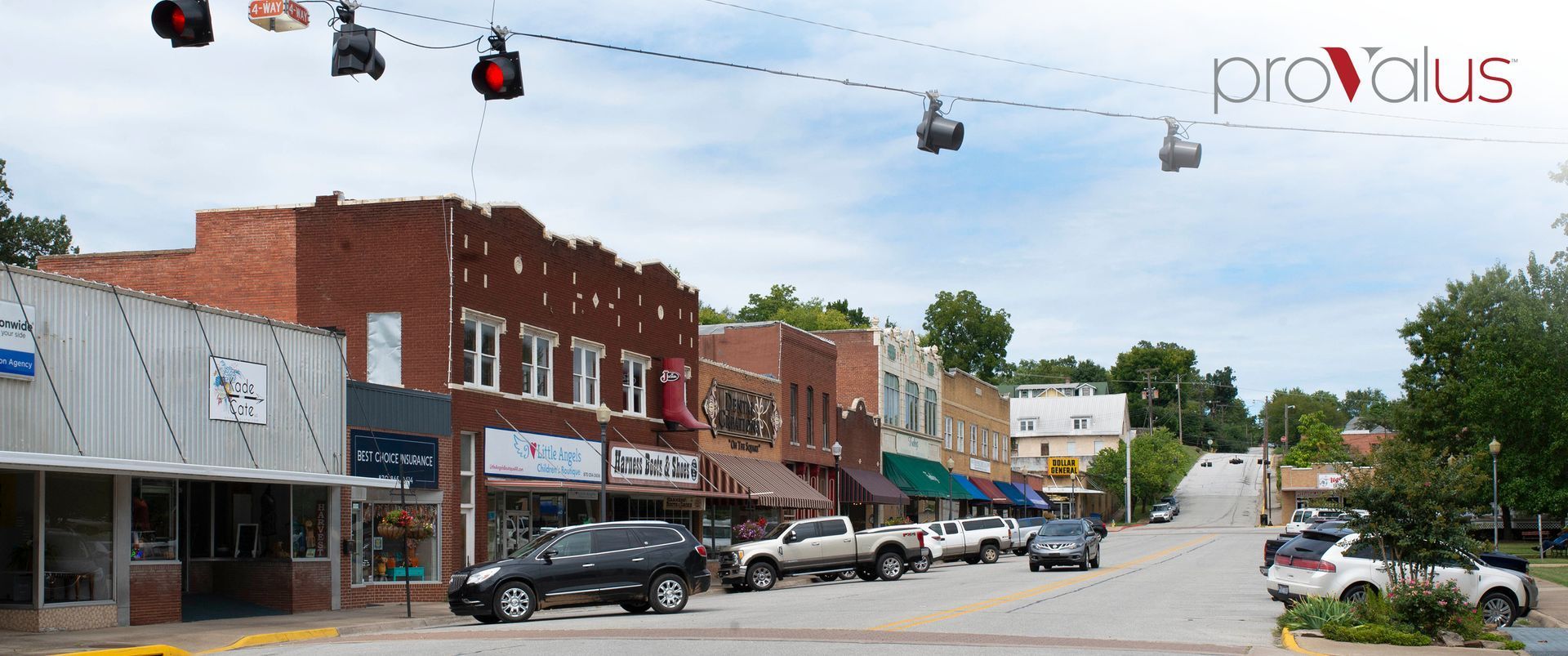
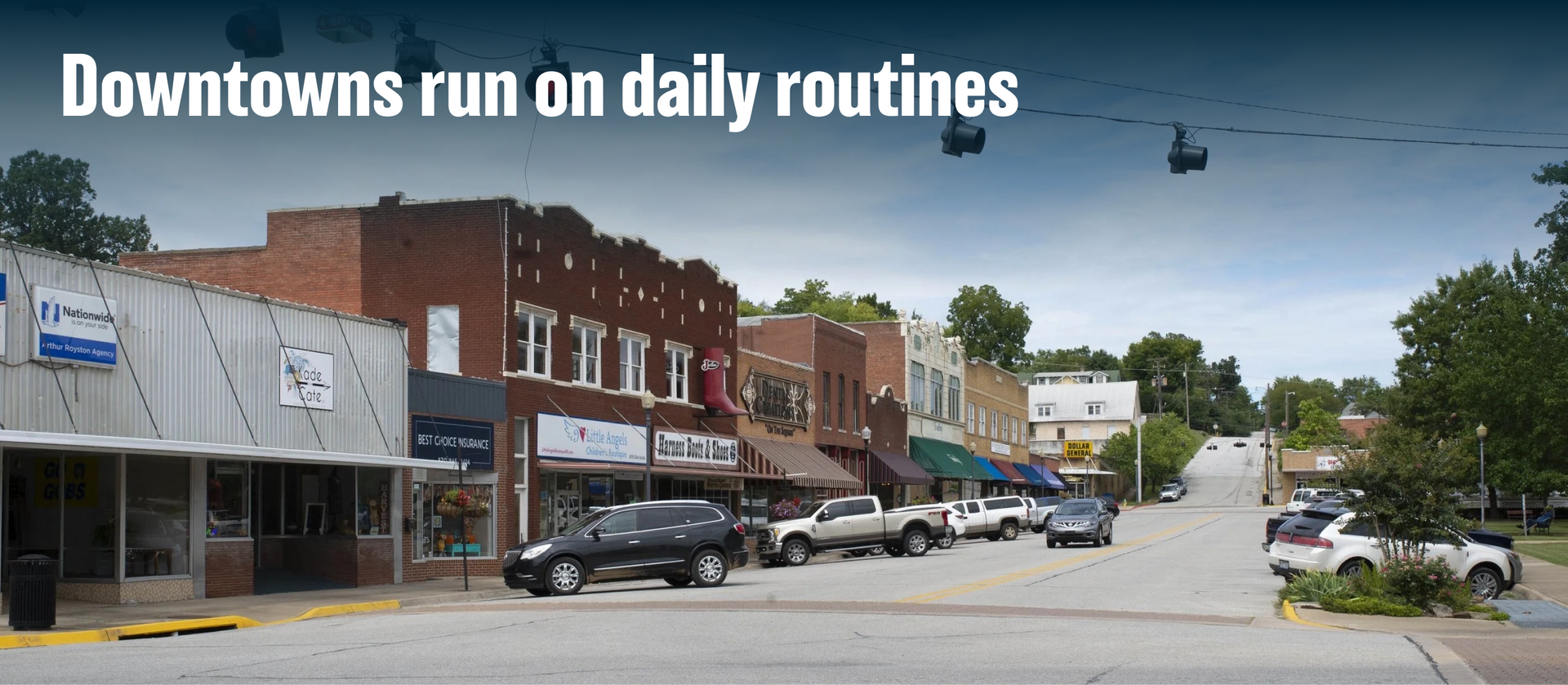
Rural downtowns struggle when demand is thin and inconsistent. Career-track jobs change that equation by bringing the same people into the same places, at the same times, every week. That routine matters more than any single program or project, because it creates the recurring local spending that small businesses depend on to survive and grow.


Downtown viability depends on recurring local spending

Retail and service businesses rely on repeat customers with predictable routines, especially during the workweek. Economic development research consistently shows that downtowns without a reliable daytime population face higher storefront churn and weaker sales, even when physical improvements are made. In practical terms, restaurants, coffee shops, and service businesses cannot survive on weekends, events, or tourism alone.


Research from the Federal Reserve Bank of Richmond notes that sustained downtown recovery depends on nearby employment that supports regular daytime activity, not just episodic foot traffic or one-time investments. When workers are absent, commercial districts struggle to maintain occupancy and momentum.

Anchor employers create repeat customers, not one-time traffic

Anchor employers matter because they increase the daytime population in a concentrated area. That population shows up five days a week and spends locally out of convenience and habit. The importance of that dynamic becomes clear when it disappears. National transaction data shows that weekday lunch sales declined sharply as remote work increased, underscoring how dependent downtown food and service businesses are on nearby workers.

In small towns, even modest employment centers can have outsized effects.


The USDA estimates that food-away-from-home spending reached $4,485 per capita in 2023. Not all of that spending happens downtown, but it gives a grounded reference point for what “disposable lunch-and-coffee money” looks like in aggregate.


If 200 more workers each spend $12 downtown twice a week on lunch or coffee, that translates to roughly $4,800 in weekly revenue, or about $240,000 a year over a typical work calendar. For many rural Main Streets, that level of recurring demand can be the difference between shortened hours and expansion.


Why employment-led demand supports reinvestment

Recurring spending does not redevelop buildings by itself, but it changes the risk calculation for business owners, landlords, and lenders. When downtown businesses see consistent weekday demand, they are more willing to extend hours, hire staff, and invest in their spaces. Property owners are more likely to renovate. Financing becomes easier to justify. Over time, that confidence supports reinvestment that is grounded in real economic activity rather than speculation.


Proof in practice: how our rural approach helped Brewton and our clients

When we opened our flagship delivery center in Brewton, Alabama, in 2017, we set out to build an onshore model rooted in career-track work, not just a place to punch a clock. Over time, what we have seen in Brewton and in other rural communities has reinforced our belief that workforce strategy and community vitality can reinforce each other.


You may have seen this approach highlighted in The Wall Street Journal, in an article titled “These Jobs Often Go Overseas. One Company Is Bringing Them to Rural America,” which describes how we invest in small towns by training and hiring local talent and creating long-term career paths.

Bringing people downtown every day creates real effects

By placing professional careers at the heart of Brewton, we changed the rhythm of the community. When hundreds of people come into town each weekday for work, they do more than show up at their desks. They get lunch, grab coffee, and run every day errands. Over time, that steady presence becomes a reliable source of weekday demand for local businesses.


Since our arrival, nearly 10 new businesses have opened in downtown Brewton, according to reporting referenced in the Wall Street Journal coverage. Many of those businesses were started by local entrepreneurs responding to the consistency of weekday activity.


Investing in our people pays off for clients and the community

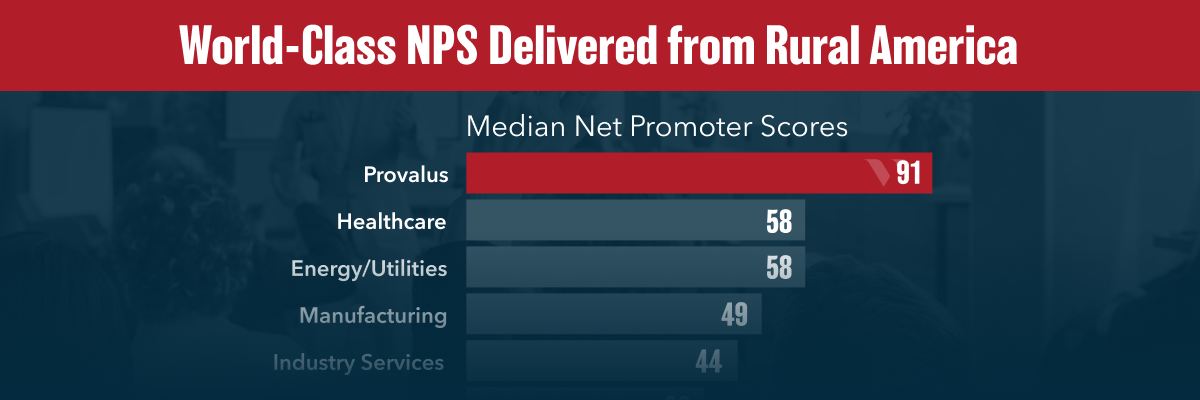
Our rural delivery model has also delivered measurable value for the companies we serve. By recruiting, training, and developing talent in rural communities, we build teams that stay together longer and perform at a high level. We see this in our retention rates, which are meaningfully higher than typical contact center benchmarks, and in client feedback reflected in strong Net Promoter Scores:


  • 90%+ annual retention compared to the industry average 55%
  • Net Promoter Score in the mid-80s, with independent validation
  • 98%+ SLA attainment and 30% to 40% faster resolution times

We design roles with career progression in mind, including scheduled wage increases, strong benefits, and clear advancement paths. That approach improves retention, deepens institutional knowledge, and allows our teams to deliver more consistent, higher-quality outcomes for clients.


How this model benefits rural towns and our clients

Brewton is one example of how this model works in practice. Employees benefit from building careers close to home. Local businesses benefit from repeat weekday spending. Clients benefit from teams that develop expertise and continuity over time. These outcomes are connected because our approach starts with long-term employment and builds toward performance that compounds, for both our partners and the communities we serve.


References

  • BSR Global Impact Sourcing Coalition, Summary of Research and Tools on Impact Sourcing (research brief). BSR
  • De Grip and Sauermann, The Role of Peers in Estimating Tenure-Performance Profiles (IZA Discussion Paper 6164). IZA
  • Hausknecht, Trevor, Howard, Unit-level voluntary turnover rates and customer service quality (Journal article summary via PubMed). PubMed
  • Moretti, Local Multipliers (AER Papers and Proceedings). Econometrics Laboratory
  • USDA ERS, U.S. consumers increased spending on food away from home in 2023 (Food Expenditure Series summary). Economic Research Service
  • Main Street America, Collective Impact Reinvestment Statistics (2024 reinvestment and reinvestment ratio definition). Main Street America
  • UB Community Development, City of Brewton Success Story (NMTC, project address, and downtown redevelopment context). UB Community Development
  • CDFI Fund, New Markets Tax Credit Program overview. CDFI Fund
  • Provalus, Provalus Featured in The Wall Street Journal for Bringing Technology Jobs to Rural America. Provalus.com
December 30, 2025
As we close out the year and prepare for 2026, we’re taking a moment to pause and reflect on all we’ve accomplished in 2025. Because of your support, we’ve been able to impact so many throughout the year.
December 4, 2025
Optomi Professional Services (OPS), announced today that Nick Murphy has been appointed Chief Operating Officer effective December 1, 2025.
NewsNation Morning in America
November 25, 2025
On the heels of their visit to our Brewton Center of Excellence, CEO Chuck Ruggiero had the pleasure of joining Alex Caprariello for a live interview on NewsNation’s Morning in America.
November 17, 2025
Last week, Senior NewsNation correspondent Brian Entin visited our Brewton Center of Excellence to document how Provalus is advancing high-tech career opportunities in rural America. The visit focused on the career pathways available to local talent and the measurable economic impact created through our work in Brewton.
November 11, 2025
In recognition of Veterans Day, Provalus President Mike Keogh was featured in Newsweek with an op-ed titled “ Veterans Are an Untapped Workforce Essential to America’s Future. ” In the piece, Keogh underscores the vital role veterans play in strengthening America’s workforce. He highlights the leadership, resilience, and mission-driven mindset that service members bring to every role, and how organizations can unlock their potential by creating environments that foster success. At Provalus, we witness this impact every day. Veterans are an integral part of our mission to create technology careers in rural America. Their skills and values elevate our teams, enhance performance, and strengthen the communities we call home. We are honored to celebrate their continued contributions, not only to our company but to the future of America’s workforce. Read the full article here .
How hiring veterans makes CX and service desk teams stronger, two veterans teamwork
November 11, 2025
Veteran‑forward hiring improves customer experience and service desk outcomes. Veterans bring calm under pressure and a strong SOP mindset, supporting better FCR
November 5, 2025
Today the Arkansas Economic Development Commission announced the expansion of Provalus into Harrison, Arkansas. Continuing our commitment to open doors for technology careers in rural communities, Provalus expects to create up to 150 new jobs in Boone County over the next five years. “Every Provalus site reflects our belief that great careers and great communities can grow together. Harrison, Arkansas, is no exception,” said Provalus’ President Mike Keogh. “By creating high-value technology careers in Boone County, we’re giving individuals the chance to build their futures without having to leave their hometowns. It’s about investing in people and helping small towns thrive again, and we’re honored to continue building that momentum here in Arkansas." Read the official release from the State of Arkansas here . For comments from local partners, click here .
October 31, 2025
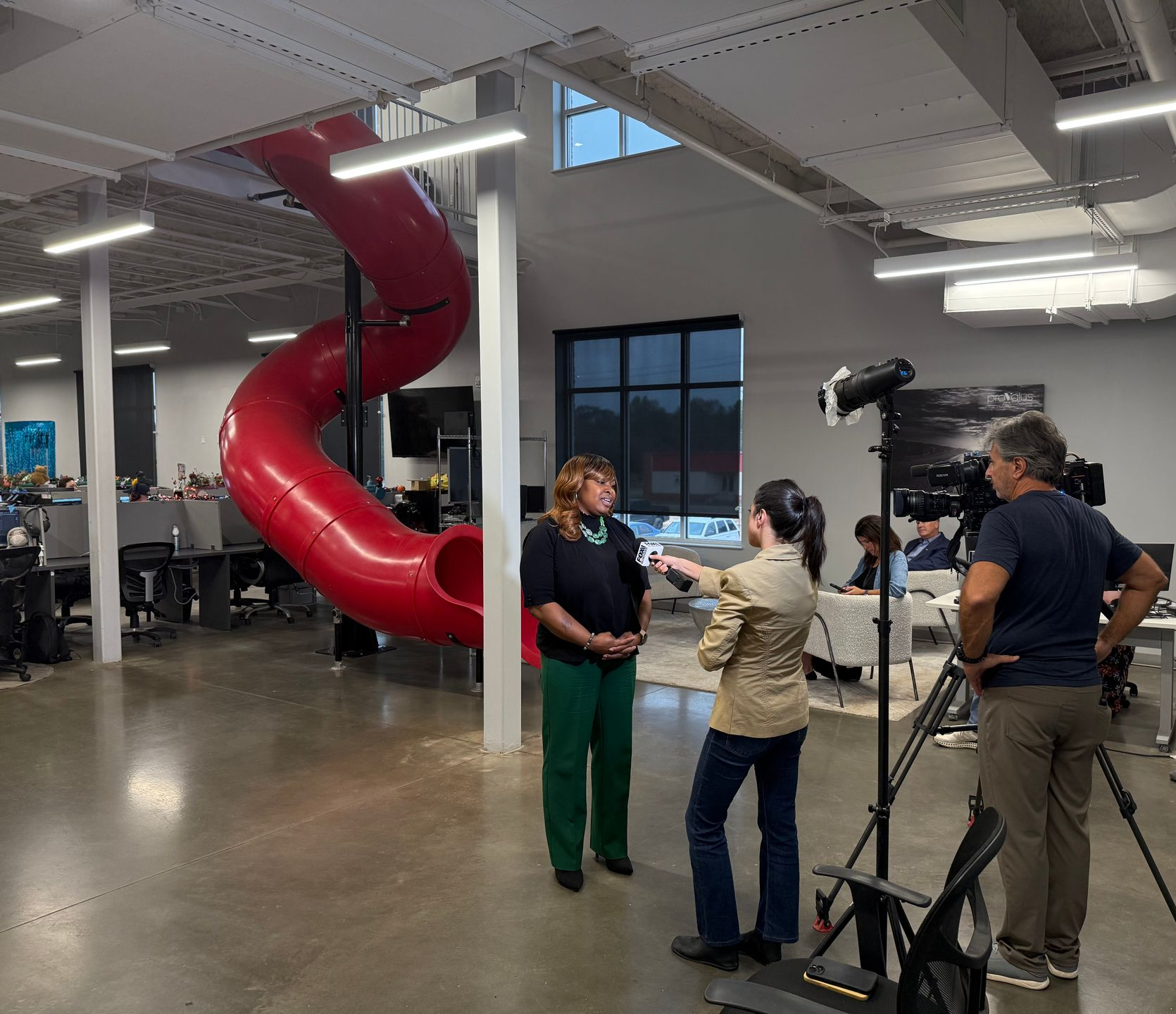
We were honored to welcome FOX Business Network correspondent Kelly Saberi to our Center of Excellence in Brewton, Alabama.
October 23, 2025
Today the Missouri Department of Economic Development announced the expansion of Provalus into West Plains, Missouri, expecting to create up to 200 new jobs in Howell County.
Provalus employees working in Center of Excellence in rural Tahlequah, Oklahoma
October 22, 2025
We’re proud to share that Provalus has been featured in The Wall Street Journal in an article titled “These Jobs Often Go Overseas. One Company Is Bringing Them to Rural America.”
Show More