
US Time Zone BPO Benefits: What Alignment Actually Delivers
What Are the Benefits of U.S. Time Zone BPO?
Working with a U.S.-based BPO team means your vendor works the same hours you do, understands the same business pressures, and operates under the same rules and regulations as your organization. Questions get answered the same day. When something urgent comes up, both teams feel it. And because both sides work within the same legal and business environment, there is less overhead managing the differences.
- Stronger retention. Teams working standard U.S. business hours avoid the schedule strain that drives high turnover in overnight BPO models, keeping experienced agents on your account longer.
- Shared urgency. When an issue arises during your business hours, your vendor's team is right there with you, working the same day, with the same sense of what is at stake.
- A simpler operating environment. U.S.-based teams work under the same regulations and business standards as your organization, which reduces the compliance overhead that comes with overseas outsourcing.
The Peak-Hours Retention Gap
When your offshore BPO team covers your business hours, they do it on a graveyard schedule, and that is where the retention problem begins.
The Retention Problem Behind the Rate Sheet
A 2025 meta-analysis of 75 studies covering more than 3.3 million shift-work participants found that night-shift workers were more than three times as likely to consider leaving their jobs as day-shift workers, 61.7% versus 18.7%. Actual turnover rates followed the same pattern, with 22.8% turnover among night-shift workers compared to 14.7% among day-shift workers.
This is true of any
BPO operation, including domestic ones. U.S.-based contact centers that run overnight shifts face the same fatigue and retention challenges. The difference is scale. A domestic overnight operation typically covers off-peak hours with a smaller share of the workforce. For overseas providers covering U.S. business hours as their primary shift, a much larger portion of the workforce is affected, and the retention risk scales with it.
The
U.S. BPO industry self-reports annual attrition at 30 to 45%. Independent research suggests the real number is significantly higher when contract and short-term staffing turnover is included. Every turnover cycle means weeks to months of ramp time before a replacement agent reaches full productivity.
For a closer look at what that adds up to across a typical engagement, read The Real Cost of Offshoring.
Experience erosion
Every agent who leaves takes institutional knowledge with them: escalation patterns, exception cases, and client context that takes months to accumulate.
In the meantime, before that experience accumulates, complex calls that a tenured agent would handle directly get escalated to supervisors, senior specialists, or client-side resources. That escalation cost never appears on the
BPO invoice.
First-call resolution rates fall as newer agents spend more time on problems they haven't encountered before. Escalation rates climb because complex cases that experienced agents once resolved directly now require supervisor involvement. An engagement that looks stable at 18 months can deteriorate significantly because the team that understood the account no longer exists, and contract metrics don't always capture that until it's well underway.
Location Is About More Than the Clock
Time zone overlap is the most visible part of the location decision, but it is not the whole picture. Where your BPO team operates also affects how they understand your customers, how they respond under pressure, and what regulatory environment governs the work.
Shared urgency
Consider a florist in the days before Mother's Day, one of the busiest periods of the year. Their walk-in cooler goes down at 10 AM on a Friday. Every hour without power threatens thousands of dollars in perishable inventory.

When they call the energy company's support line, the agent who picks up doesn't need to be briefed on the stakes. They already understand. Mother's Day is on their calendar too. That shared context changes the conversation from a scripted troubleshooting call into a genuine effort to solve an urgent problem quickly.
That kind of shared context shows up in escalation decisions, real-time judgment calls, and anything that requires understanding what your customer is actually going through. It isn't something you can train into a team operating on a different business calendar.
Operating environment complexity
A U.S.-based team operates within the same regulatory framework as your organization. When compliance requirements come up, both sides are already working from the same rulebook:
- Cross-border data handling under HIPAA and FFIEC carries additional documentation requirements, audit rights, and testing obligations that domestic contracts typically don't.
- ITAR and CMMC create hard floors for defense work. Offshore providers are categorically ineligible.

If your offshore contract doesn't account for these cost lines, the savings figure on the proposal is not the savings figure you will see.
The Provalus Model
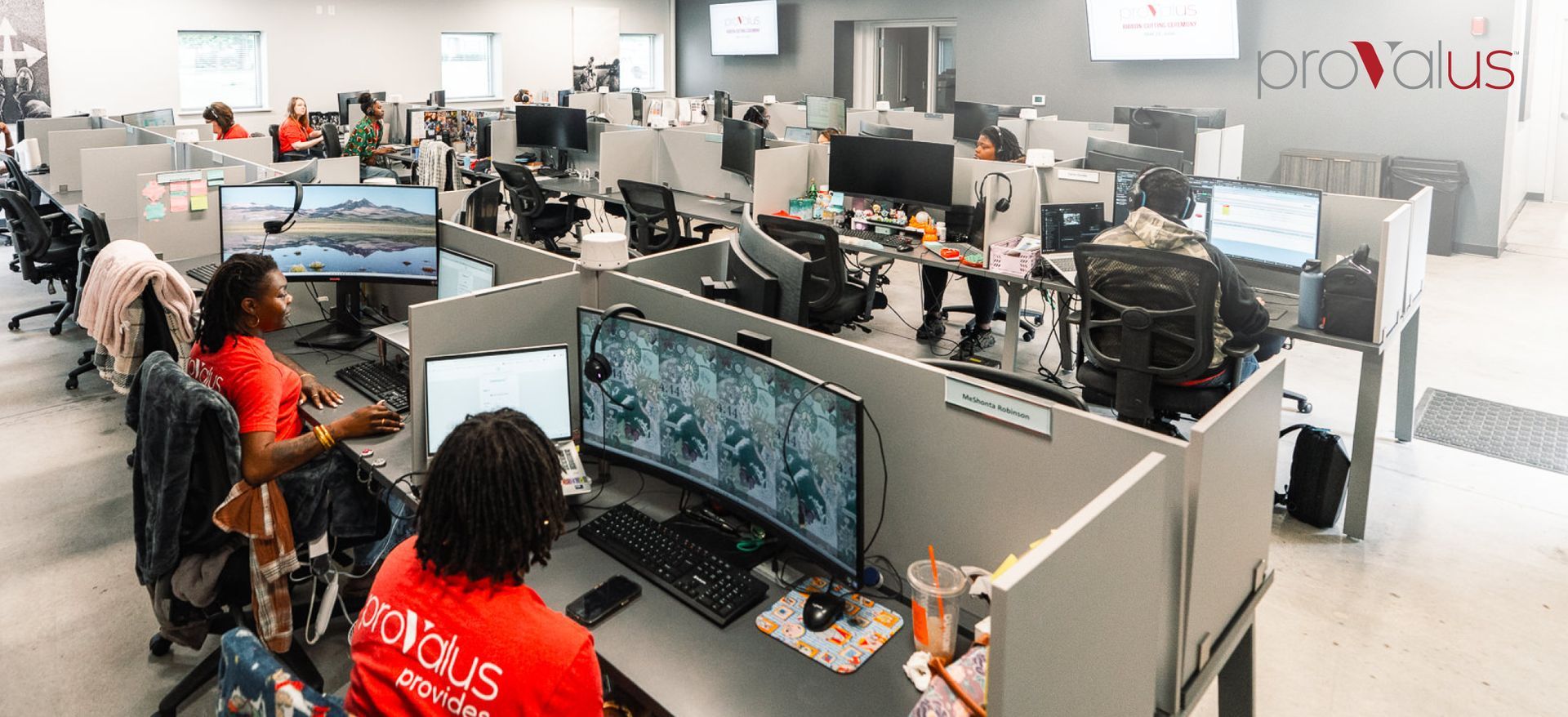
Provalus operates 100% U.S.-based, on-site Centers of Excellence in towns like Brewton, Alabama; Jasper, Texas; and Manning, South Carolina. Every team is dedicated to a single client.
Built for retention
The rural Center of Excellence model creates workforce stability that urban delivery centers and offshore providers rarely match. This is the structural foundation behind Provalus's onshore BPO model, built in smaller markets where deep community ties, real career paths, and on-site leadership accountability develop over time.
What that produces in practice
- Industry-low annual attrition against a U.S. BPO industry norm of 30 to 45%
- SLAs above 98% across multi-year contracts
- NPS in the mid-80s, independently validated twice
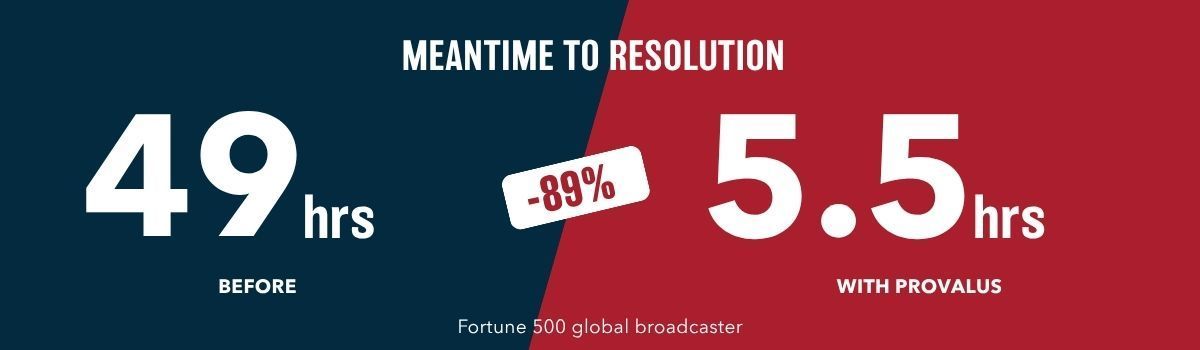
- For a Fortune 500 global broadcaster: MTTR from 49 hours to 5.5 hours, an 89% reduction
Industry-low attrition means the agent handling an account in year three knows the escalation patterns, exception cases, and context a new hire needs six months to build, so experience compounds rather than resets on a regular turnover cycle.
Every outsourcing decision made purely on rate made sense at the time. For queueable, standardized work, it may still. But for work that requires real-time decisions, expertise that accumulates with tenure, a domestic operating environment, or client trust built through sustained live interaction, the total cost of a 12-hour gap tends to exceed the rate savings once the hidden lines are counted.
The question worth asking before the next contract renewal is not whether you can get this cheaper offshore. It's what your current model is actually costing you that isn't on the invoice.
What Provalus delivers is a delivery model built on U.S.-based workforce stability, dedicated on-site teams, and a domestic operating environment. That is the foundation behind industry-low attrition in a sector that averages 30 to 45%.